
If you’ve ever published a blog post and wondered why it didn’t appear on Google, the answer is often simple—you targeted the wrong keywords.
Keyword research is the foundation of Search Engine Optimization (SEO). It helps you understand what people are searching for online and how you can create content that answers their questions. Whether you’re a student, blogger, freelancer, or digital marketer, learning keyword research is one of the most valuable SEO skills you can develop.
In this guide, you’ll learn everything you need to know about keyword research—from understanding keyword types to finding profitable keywords using free tools. By the end of this article, you’ll be able to build an effective keyword strategy and create content that has a better chance of ranking on Google.
What is Keyword Research?
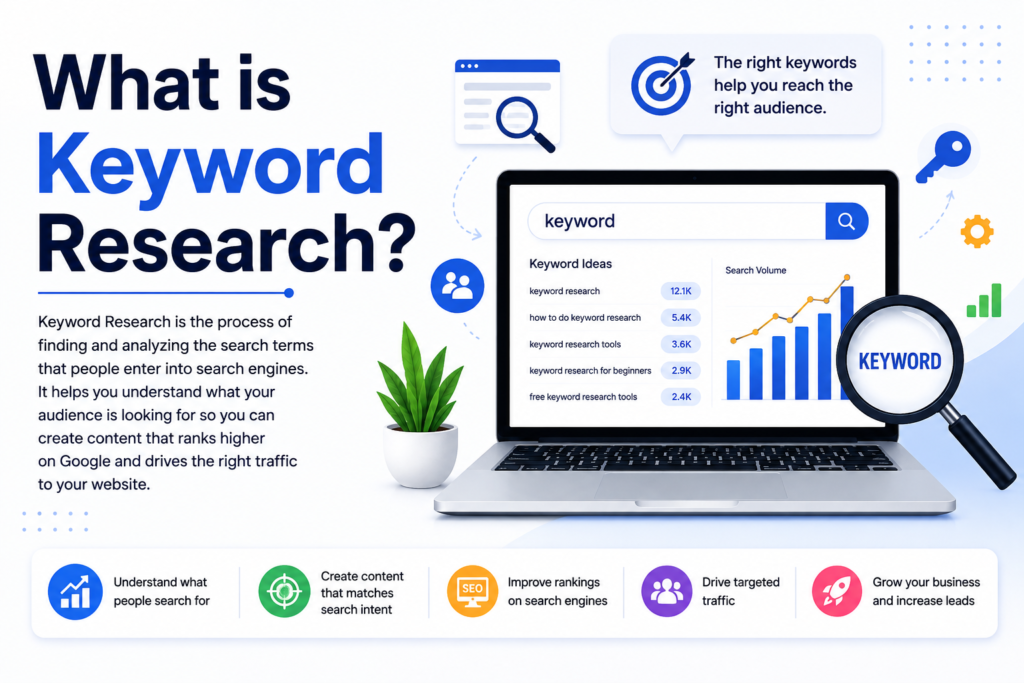
Keyword research is the process of finding the words and phrases that users type into search engines like Google.
These keywords help you understand:
- What your audience is looking for
- How often people search for a topic
- How competitive a keyword is
- Which keywords are worth targeting
For example, instead of writing an article on SEO, you could target a more specific keyword such as:
- Keyword Research for Beginners
- How to Do Keyword Research
- Free Keyword Research Tools
- Keyword Research Guide 2026
Specific keywords usually have less competition and attract users with a clearer intent.
Why is Keyword Research Important?
Keyword research is essential because it helps you create content that matches what users are already searching for.
Benefits include:
- Increased organic traffic
- Better Google rankings
- Higher-quality visitors
- Improved content planning
- Better conversion rates
- More leads and customers
Without keyword research, you’re essentially guessing what your audience wants.
How Search Engines Use Keywords
When someone enters a search query, Google’s algorithm scans billions of web pages to find the most relevant results.
Google considers many factors, including:
- Page title
- Headings
- Content relevance
- Search intent
- Internal links
- Website authority
- User experience
If your content matches the user’s search intent and provides valuable information, it has a better chance of ranking.
Types of Keywords
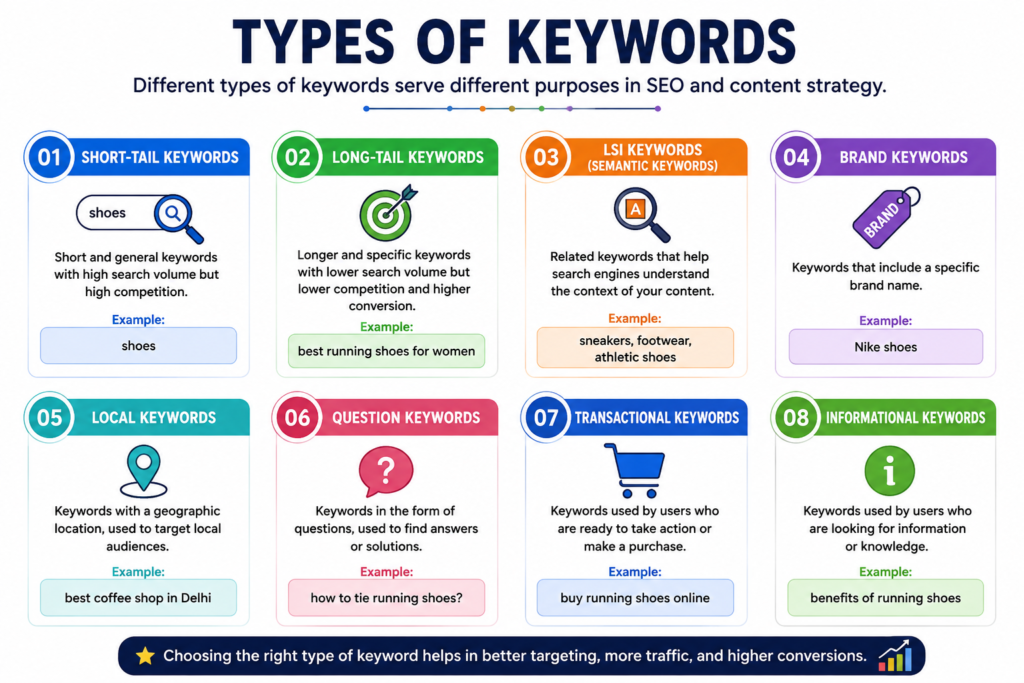
1. Short-Tail Keywords
These are broad keywords with high search volume.
Examples:
- SEO
- Marketing
- Blogging
Advantages:
- High traffic
Disadvantages:
- Very competitive
- Difficult for beginners to rank
2. Long-Tail Keywords
Long-tail keywords are longer and more specific search phrases.
Examples:
- Keyword Research for Beginners
- Best Free SEO Tools for Students
- How to Rank a New Website
Advantages:
- Easier to rank
- Lower competition
- Better conversion rate
3. Informational Keywords
People searching for information.
Examples:
- What is SEO?
- How does keyword research work?
- What is search intent?
4. Navigational Keywords
Users want to visit a specific website.
Examples:
- Google Search Console
- Google Analytics Login
- Rank Math SEO
5. Transactional Keywords
Users are ready to purchase or sign up.
Examples:
- Buy SEO Course
- Best Digital Marketing Course
- SEO Services Near Me
Understanding Search Intent
Search intent refers to the reason behind a search.
There are four main types.
Informational
The user wants to learn something.
Example:
- What is Keyword Research?
Commercial
The user is comparing products or services.
Example:
- Best SEO Tools
Transactional
The user is ready to buy.
Example:
- Buy SEO Course Online
Navigational
The user wants a particular website.
Example:
- Google Search Console Login
Understanding search intent helps you create content that satisfies user expectations.
Free Keyword Research Tools
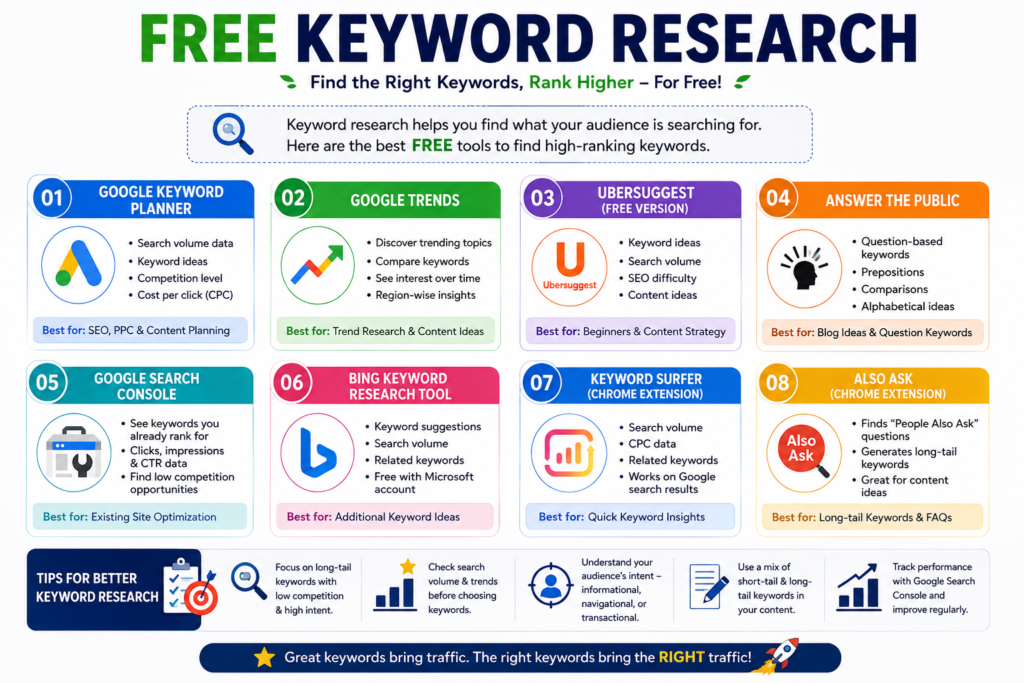
Here are some of the best free tools for beginners.
Google Keyword Planner
Perfect for finding keyword ideas and estimating search volume.
Google Autocomplete
Type your keyword into Google and observe the suggestions.
Example:
Keyword Research…
Google may suggest:
- Keyword Research for Beginners
- Keyword Research Free
- Keyword Research Tutorial
People Also Ask
These questions are excellent ideas for H2 headings and FAQs.
Google Trends
Shows whether a keyword is gaining or losing popularity over time.
Google Search Console
If your website is already live, Search Console reveals the keywords you’re currently ranking for.
Ubersuggest
Provides keyword ideas, competition level, and content suggestions.
AnswerThePublic
Great for discovering real questions people ask online.
How to Find the Right Keywords
Step 1: Choose a Topic
Instead of starting with a keyword, begin with a broad topic.
Example:
SEO
Step 2: Expand the Topic
Break it into smaller subtopics.
Examples:
- On-Page SEO
- Technical SEO
- Local SEO
- Keyword Research
- Link Building
Step 3: Find Related Keywords
Use Google suggestions and keyword tools.
Example:
Main Keyword:
Keyword Research
Related Keywords:
- Keyword Research Guide
- Keyword Research for Beginners
- Keyword Research Tutorial
- Keyword Research Process
- Keyword Research Tips
Step 4: Check Competition
Beginners should target keywords with lower competition and clear user intent.
Step 5: Understand Search Intent
Ask yourself:
Why is someone searching for this keyword?
Your content should answer that question thoroughly.
Where Should You Use Keywords?
Use your focus keyword naturally in:
- SEO Title
- Meta Description
- URL
- H1 Heading
- First 100 Words
- H2 Headings
- Image Alt Text
- Conclusion
- FAQ Section
Avoid stuffing the same keyword repeatedly. Write naturally for readers first.
Common Keyword Research Mistakes
Avoid these mistakes:
- Targeting highly competitive keywords as a beginner
- Ignoring search intent
- Using only one keyword
- Keyword stuffing
- Publishing thin content
- Not updating old articles
- Skipping internal links
- Ignoring image optimization
Keyword Research Tips for Beginners
- Focus on long-tail keywords.
- Answer real user questions.
- Use free tools before investing in paid tools.
- Analyze the top-ranking pages for your target keyword.
- Group related keywords into a single comprehensive article.
- Update your content regularly to keep it fresh.
- Track your rankings in Google Search Console.
Conclusion
Keyword research is the first step toward successful SEO. By understanding what your audience is searching for and creating content that meets their needs, you can improve your chances of ranking higher on Google and attracting the right visitors to your website.
Start with long-tail keywords, focus on search intent, use free keyword research tools, and publish high-quality content consistently. Over time, your website can build authority and gain more organic traffic.
Remember, SEO is a long-term strategy. The more you practice keyword research, the better you’ll become at identifying opportunities that your competitors may overlook.
faqs
1. What is keyword research in SEO?
Keyword research is the process of finding the search terms people use on Google so you can create relevant, optimized content.
2. Which is the best free keyword research tool?
Google Keyword Planner, Google Search Console, Google Trends, and Google Autocomplete are excellent free options.
3. What are long-tail keywords?
Long-tail keywords are specific search phrases with lower competition and higher conversion potential.
4. Why is search intent important?
Search intent helps you create content that matches what users actually want, improving rankings and engagement.
5. How many keywords should I target in one article?
Focus on one primary keyword and several closely related secondary keywords that naturally support the topic.
6. Can beginners rank on Google?
Yes. By targeting low-competition, long-tail keywords and publishing valuable, well-optimized content consistently, beginners can achieve rankings over time.
Internal Linking Suggestions
From this article, link to:
- Complete On-Page SEO Guide
- Technical SEO Checklist
- Free SEO Tools for Beginners
- Google Search Console Tutorial
- Local SEO Guide
- How to Start a Blog
- Rank Math SEO Setup Guide
