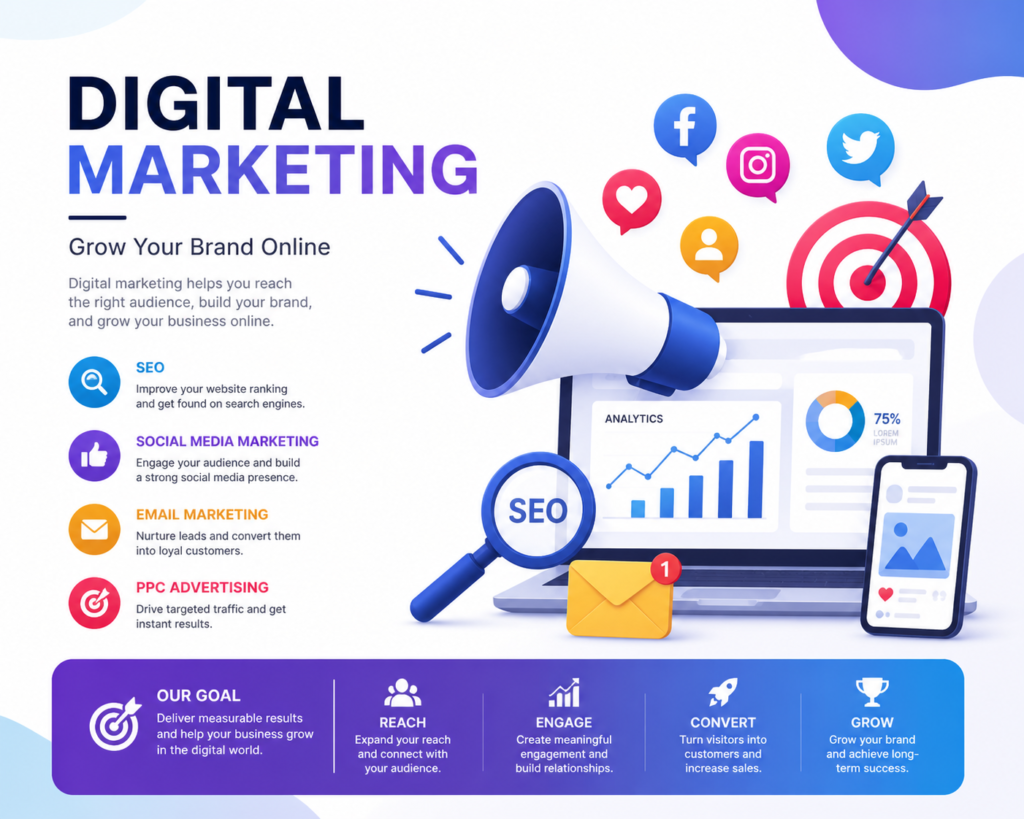

Digital marketing is no longer just a strategy—it’s the backbone of how businesses connect with people today. From the moment you wake up and check your phone, to scrolling through social media, watching videos, or searching for products online—you’re constantly interacting with digital marketing. It’s everywhere, but the magic lies in how seamlessly it blends into our daily lives.
At its core, digital marketing is about reaching the right audience, at the right time, with the right message. But beyond that simple definition, it’s a powerful mix of creativity, data, psychology, and technology that shapes how brands communicate and grow.
Understanding Digital Marketing in Simple Terms
Imagine opening a small shop in a busy market versus opening one in a deserted street. Which one would perform better? Obviously, the busy market. Digital marketing works in a similar way—it helps businesses place themselves where people already are: online.
Whether it’s Google, Instagram, YouTube, or email inboxes, digital marketing ensures your brand shows up where attention already exists.
But here’s the real shift: traditional marketing talks at people, while digital marketing talks with them. It creates conversations, builds relationships, and most importantly, earns trust.
Why Digital Marketing Matters More Than Ever
We live in a digital-first world. People don’t just buy products—they research, compare, read reviews, and then decide. This means brands need to be visible, informative, and relatable.
Digital marketing matters because:
- It gives even small businesses a chance to compete with big brands
- It allows precise targeting of audiences
- It provides measurable results
- It builds long-term customer relationships
Unlike traditional advertising, where results are often uncertain, digital marketing gives you clear data—what worked, what didn’t, and how to improve.
The Core Pillars of Digital Marketing
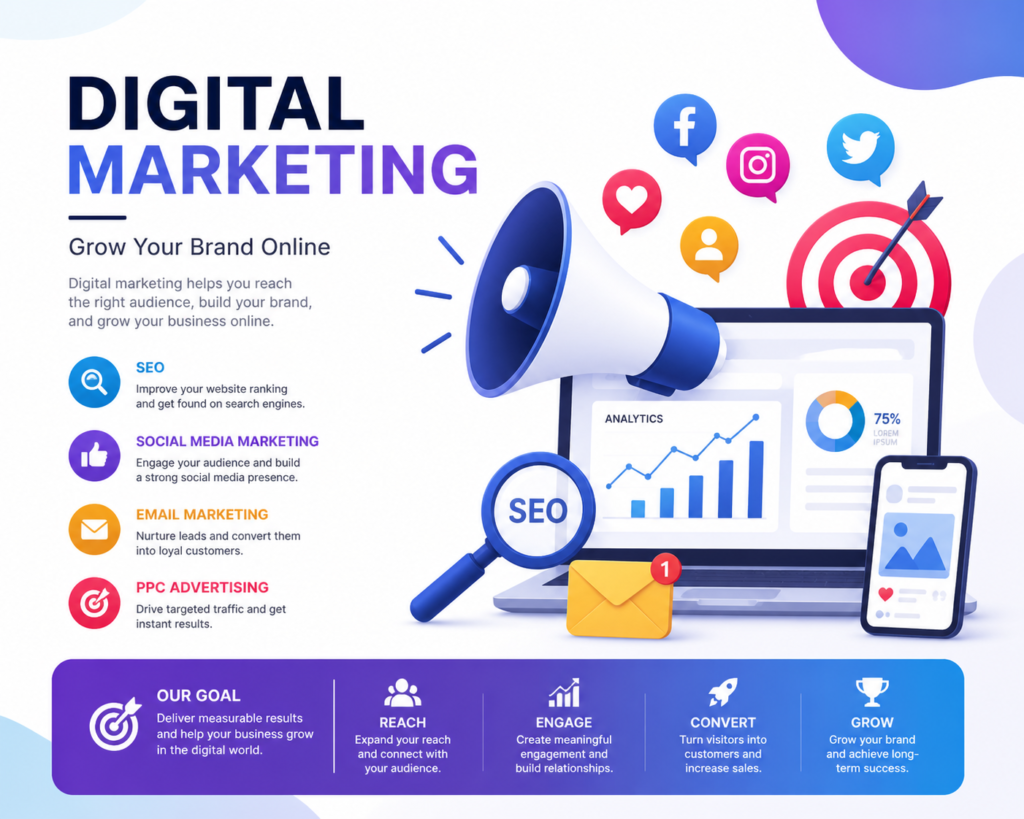
Digital marketing is not just one thing—it’s a combination of several strategies working together.
1. Search Engine Optimization (SEO)
SEO is all about improving your website so it appears on search engines like Google when people search for something related to your business.
Think of SEO as building credibility. When your website ranks high, people trust you more. It’s not about tricking the algorithm—it’s about providing valuable content that answers users’ questions.
SEO includes:
- On-page SEO (content, keywords, structure)
- Off-page SEO (backlinks, authority)
- Technical SEO (website speed, mobile-friendliness)
The beauty of SEO is that it’s a long-term investment. Once your content starts ranking, it can bring traffic for months or even years.
2. Social Media Marketing (SMM)
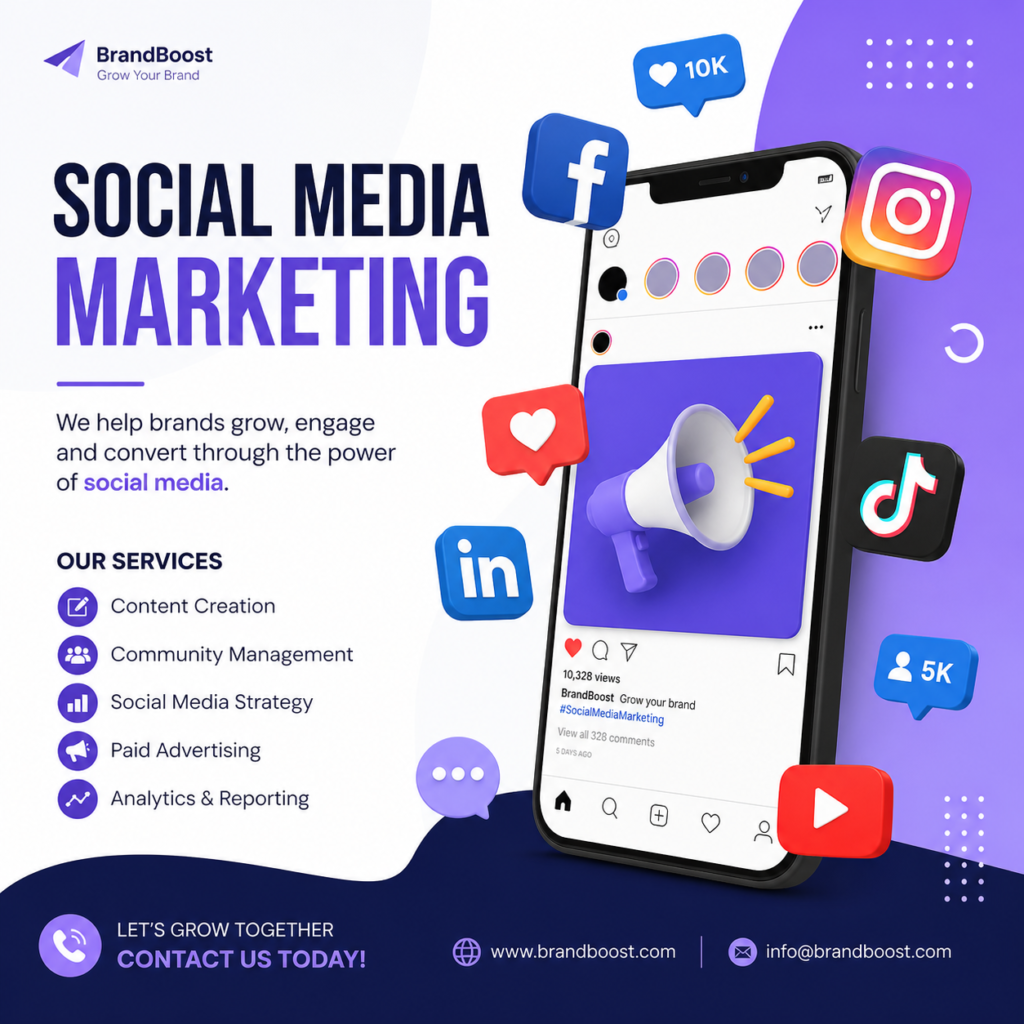
Social media is where people spend a huge portion of their time. Platforms like Instagram, Facebook, and LinkedIn are not just for entertainment—they are powerful marketing tools.
Social media marketing is about storytelling. It’s where brands show their personality, connect emotionally, and engage directly with their audience.
It includes:
- Creating engaging posts and reels
- Running paid advertisements
- Building a community
- Interacting with followers
The key here is consistency and authenticity. People don’t connect with perfect brands—they connect with real ones.
3. Content Marketing
Content is the foundation of digital marketing. Without content, there is nothing to share, promote, or rank.
Content marketing focuses on creating valuable, relevant, and consistent content to attract and retain an audience.
This includes:
- Blog posts
- Videos
- Infographics
- Podcasts
- Social media content
Good content doesn’t just sell—it educates, entertains, and inspires. It solves problems and builds trust over time.
4. Email Marketing
Email marketing may seem old-school, but it’s still one of the most effective digital marketing strategies.
Why? Because it’s personal.
When someone gives you their email, they’re giving you direct access to their inbox—a very personal space. This makes email marketing powerful for building relationships and driving conversions.
It includes:
- Newsletters
- Promotional emails
- Automated campaigns
- Personalized offers
The key is not to spam but to provide value.
5. Pay-Per-Click Advertising (PPC)
PPC is a form of paid marketing where you pay each time someone clicks on your ad.
Platforms like Google Ads and social media ads allow businesses to target specific audiences based on location, interests, behavior, and more.
PPC is great for:
- Quick visibility
- Driving immediate traffic
- Testing campaigns
Unlike SEO, which takes time, PPC gives instant results—but it requires a smart strategy to avoid wasting money.
The Role of Data in Digital Marketing
One of the biggest advantages of digital marketing is data.
Every click, like, share, and purchase tells a story. Businesses can analyze this data to understand customer behavior, preferences, and trends.
This helps in:
- Improving campaigns
- Personalizing experiences
- Making better decisions
Data turns guesswork into strategy. Instead of hoping something works, marketers can see exactly what’s working.
Human Connection in a Digital World
Even though digital marketing uses technology, its success depends on human connection.
People don’t buy from brands—they buy from brands they trust and relate to.
This is why storytelling, emotion, and authenticity are so important. A simple, genuine message can outperform a highly polished but disconnected campaign.
For example:
- Sharing real customer stories
- Showing behind-the-scenes content
- Being transparent and honest
These small efforts make a big difference.
Challenges in Digital Marketing
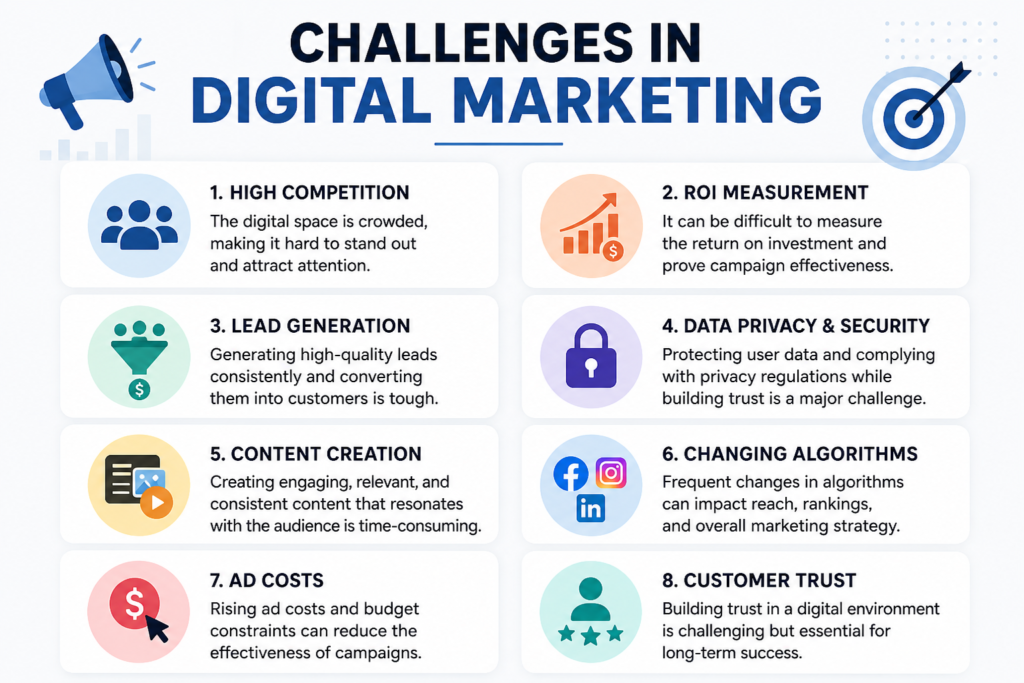
While digital marketing offers many opportunities, it also comes with challenges.
1. High Competition
Almost every business is online, making it harder to stand out.
2. Constant Changes
Algorithms, trends, and tools keep evolving. Marketers need to stay updated.
3. Attention Span
People scroll quickly. You have only a few seconds to grab attention.
4. Trust Issues
With so much content online, people are skeptical. Building trust takes time.
The Future of Digital Marketing
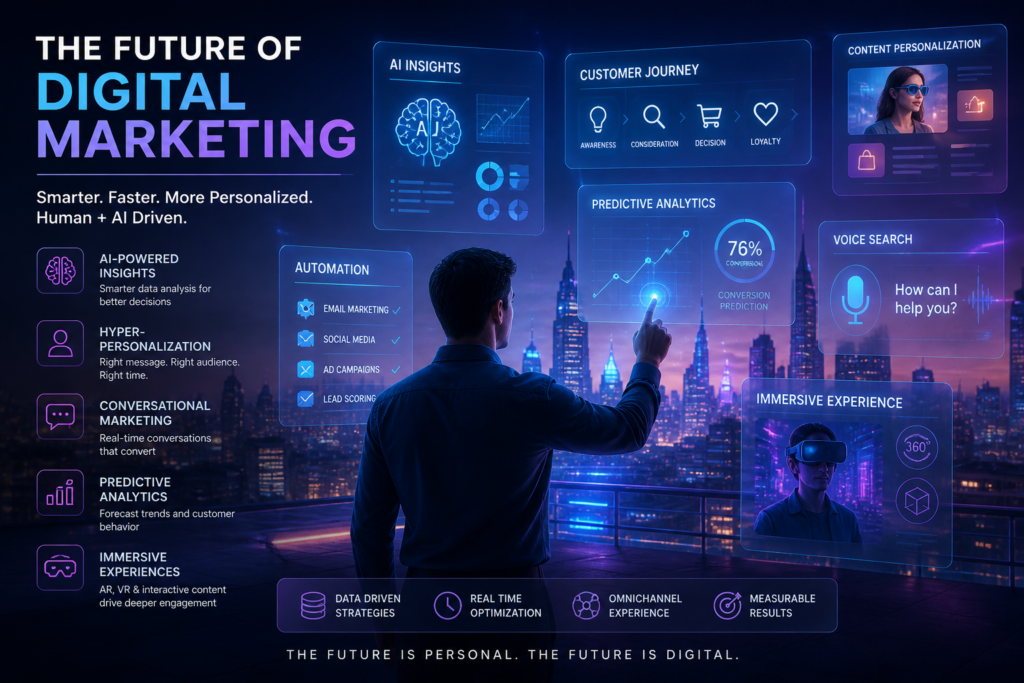
Digital marketing is constantly evolving, and the future looks even more exciting.
Some key trends include:
- Artificial Intelligence (AI): Automating tasks and personalizing experiences
- Voice Search: Optimizing for voice-based queries
- Video Content: Short-form videos dominating platforms
- Influencer Marketing: Collaborating with creators
- Personalization: Tailoring content to individual users
The focus is shifting from mass marketing to personalized experiences.
How to Start in Digital Marketing
If you’re new to digital marketing, the best way to start is by learning and practicing.
Here’s a simple roadmap:
- Understand the basics (SEO, SMM, content)
- Learn from free resources and courses
- Create your own content (Instagram, blog, etc.)
- Practice consistently
- Analyze results and improve
Digital marketing is a skill—you get better with practice.
Why Digital Marketing is a Great Career choice
Digital marketing is one of the fastest-growing career fields today.
It offers:
- High demand
- Creative freedom
- Work-from-home opportunities
- Freelancing options
- Continuous learning
Whether you want to work for a company, start your own business, or become a freelancer—digital marketing opens many doors.
Conclusion
Digital marketing is not just about tools or techniques—it’s about understanding people.
It’s about knowing what they need, what they feel, and how to connect with them in a meaningful way.
In a world full of noise, the brands that succeed are the ones that listen, adapt, and create value.
As technology continues to evolve, one thing remains constant: human connection. And digital marketing, when done right, is one of the most powerful ways to build that connection.