
In today’s digital world, social media marketing has become one of the most powerful ways for businesses to connect with people, build trust, and grow online. From small startups to global brands, everyone is using social media platforms to attract audiences, promote products, and create long-term customer relationships. Whether it is Instagram, Facebook, LinkedIn, YouTube, or X, social media has transformed how brands communicate with consumers.
Social media marketing is not only about posting pictures or videos. It is about creating meaningful connections, understanding audience behavior, sharing valuable content, and building a strong online presence. Businesses that use social media effectively can increase brand awareness, generate leads, boost website traffic, and improve sales.
This guide explains everything about social media marketing, including its importance, strategies, benefits, trends, and future opportunities.
What is Social Media Marketing?
Social media marketing, also called SMM, is the process of using social media platforms to promote a business, brand, product, or service. It includes activities such as:
- Creating and sharing content
- Running paid advertisements
- Engaging with followers
- Building communities
- Collaborating with influencers
- Tracking performance and analytics
The main goal of social media marketing is to connect with the target audience and encourage them to take action, such as buying a product, following a page, or visiting a website.
Importance of Social Media Marketing
Social media has become a part of people’s daily lives. Millions of users spend hours every day scrolling through platforms, watching videos, and interacting with content. This gives businesses a huge opportunity to reach potential customers.
Here are some reasons why social media marketing is important:
1. Increases Brand Awareness
Social media helps businesses become visible to a larger audience. A single viral post can reach thousands or even millions of people within hours.
2. Direct Communication with Customers
Brands can directly interact with users through comments, messages, polls, and live sessions. This builds trust and improves customer relationships.
3. Cost-Effective Marketing
Compared to traditional marketing methods like television or newspaper ads, social media marketing is more affordable and provides better targeting options.
4. Boosts Website Traffic
Businesses can drive traffic to their websites through social media posts, stories, and ads.
5. Generates Leads and Sales
Platforms like Instagram and Facebook now support shopping features, making it easier for users to purchase products directly.
6. Improves Customer Engagement
Engaging content encourages likes, shares, comments, and saves, helping brands stay connected with their audience.
Popular Social Media Platforms
Different platforms serve different purposes. Businesses should choose platforms according to their target audience and goals.
1. Instagram
Instagram is highly visual and ideal for brands focusing on images, reels, stories, and influencer marketing. Fashion, beauty, travel, and food brands perform especially well here.
Key Features:
- Reels
- Stories
- Carousels
- Live videos
- Shopping features
2. Facebook
Facebook remains one of the largest social media platforms. It is useful for community building, advertising, and customer communication.
Key Features:
- Facebook pages
- Groups
- Marketplace
- Video content
- Paid ads
3. YouTube
YouTube is the world’s largest video-sharing platform. Long-form videos, tutorials, vlogs, and educational content perform well.
Benefits:
- High engagement
- Better search visibility
- Monetization opportunities
4. LinkedIn
LinkedIn is mainly used for professional networking and B2B marketing. Companies use it to share industry knowledge and connect with professionals.
Best For:
- Corporate branding
- Recruitment
- Professional networking
- B2B lead generation
5. X (Twitter)
X is useful for trending topics, news updates, and quick communication with audiences.
Benefits:
- Real-time updates
- Brand conversations
- Customer support
6. Pinterest
Pinterest is a visual discovery platform used for inspiration and shopping ideas.
Best For:
- Home decor
- Fashion
- DIY projects
- Food recipes
Types of Social Media Content

Content is the heart of social media marketing. Good content attracts attention and encourages engagement.
1. Images
Creative and high-quality images help brands create a strong visual identity.
2. Videos
Short videos and reels are currently the most popular form of content because they are entertaining and easy to consume.
3. Stories
Stories disappear after 24 hours and are useful for updates, polls, behind-the-scenes content, and promotions.
4. Live Streaming
Live sessions allow brands to interact with audiences in real time.
5. Infographics
Infographics present information in a visually appealing way.
6. User-Generated Content
Content created by customers increases trust and authenticity.
7. Memes
Funny and relatable memes can increase reach and engagement.
Social Media Marketing Strategy
A successful social media marketing strategy requires proper planning and consistency.
Step 1: Define Goals
Businesses should clearly identify what they want to achieve.
Common Goals:
- Brand awareness
- Lead generation
- Website traffic
- Sales growth
- Community building
Step 2: Understand the Target Audience
Knowing the audience is extremely important.
Factors to Analyze:
- Age
- Gender
- Interests
- Location
- Online behavior
Understanding the audience helps businesses create relevant content.
Step 3: Choose the Right Platforms
Not every platform is suitable for every business. Brands should focus on platforms where their audience is most active.
Step 4: Create Quality Content
Content should be:
- Valuable
- Informative
- Entertaining
- Consistent
- Visually attractive
Step 5: Use a Content Calendar
A content calendar helps businesses plan posts in advance and maintain consistency.
Step 6: Engage with Followers
Replying to comments and messages helps build strong customer relationships.
Step 7: Track Performance
Analytics tools help businesses understand what is working and what needs improvement.
Important Metrics:
- Reach
- Engagement
- Click-through rate
- Conversion rate
- Follower growth
Benefits of Social Media Marketing
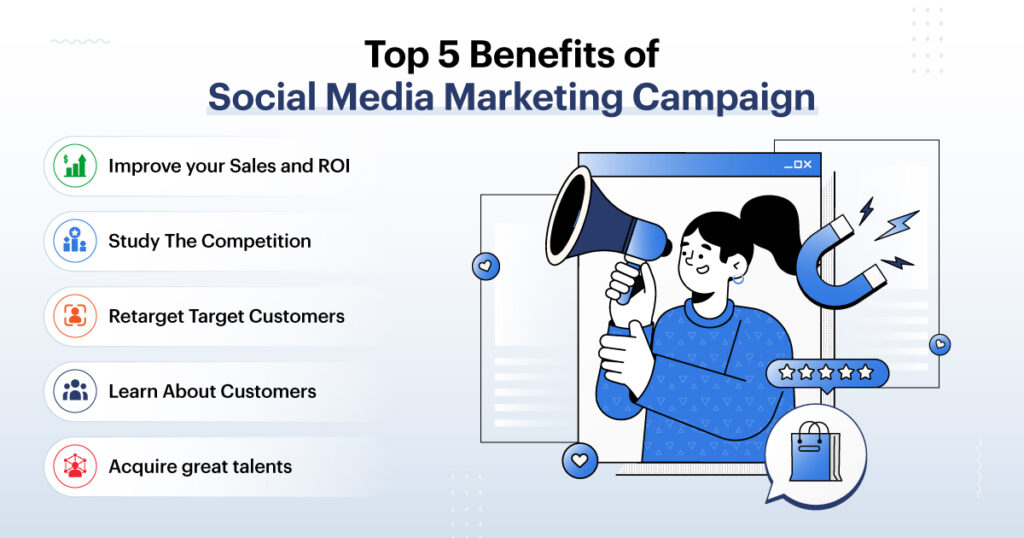
1. Better Brand Recognition
Consistent posting improves visibility and brand identity.
2. Increased Customer Loyalty
Regular interaction creates trust and loyalty among customers.
3. Higher Conversion Rates
Engaging content encourages people to take action.
4. Improved SEO Performance
Social signals can indirectly improve search engine visibility.
5. Competitive Advantage
Brands with strong social media presence often outperform competitors.
Role of Influencer Marketing
Influencer marketing has become a major part of social media marketing. Influencers already have loyal audiences, making them powerful promoters.
Types of Influencers
Nano Influencers
Small but highly engaged audiences.
Micro Influencers
Affordable and trusted by followers.
Macro Influencers
Large reach and higher visibility.
Celebrity Influencers
Massive audiences and strong brand exposure.
Paid Social Media Advertising
Organic reach is important, but paid advertising helps businesses reach larger audiences faster.
Types of Social Media Ads
Image Ads
Simple and visually appealing.
Video Ads
Highly engaging and effective.
Carousel Ads
Show multiple products or images.
Story Ads
Fullscreen ads appearing between stories.
Lead Generation Ads
Collect customer information directly.
Social Media Marketing Trends
Social media changes rapidly. Businesses must stay updated with trends.
1. Short-Form Video Content
Platforms like Instagram Reels and YouTube Shorts are dominating social media.
2. AI in Social Media Marketing
Artificial Intelligence helps brands:
- Create captions
- Analyze audience behavior
- Schedule content
- Improve customer service
3. Personalized Content
Users prefer content tailored to their interests.
4. Social Commerce
Shopping directly through social media platforms is increasing.
5. Authenticity
People connect more with real and genuine content rather than overly polished advertisements.
Challenges in Social Media Marketing
Despite its benefits, social media marketing also has challenges.
1. High Competition
Millions of brands compete for attention online.
2. Algorithm Changes
Platforms frequently update algorithms, affecting reach and engagement.
3. Negative Feedback
Brands may face criticism publicly.
4. Consistency Pressure
Regular content creation requires time and creativity.
5. Measuring ROI
Tracking exact returns from social media campaigns can be difficult.
Social Media Marketing for Small Businesses
Small businesses can greatly benefit from social media because it allows them to compete with larger brands at a lower cost.
Tips for Small Businesses:
- Focus on one or two platforms initially
- Post consistently
- Use local hashtags
- Engage with customers
- Share customer reviews
- Use short videos
Importance of Hashtags
Hashtags help increase visibility and reach.
Example Hashtags:
#SocialMediaMarketing
#DigitalMarketing
#MarketingStrategy
#ContentMarketing
#InstagramMarketing
#BusinessGrowth
#OnlineMarketing
#BrandAwareness
Businesses should use relevant and trending hashtags instead of random ones.
Best Practices for Social Media Marketing
1. Post Consistently
Consistency helps maintain audience interest.
2. Use High-Quality Visuals
Good visuals attract more engagement.
3. Understand Analytics
Data helps improve marketing performance.
4. Focus on Storytelling
People connect emotionally with stories.
5. Stay Updated with Trends
Following trends helps brands stay relevant.
6. Optimize Posting Time
Posting when audiences are active improves engagement.
7. Collaborate with Creators
Partnerships increase brand exposure.
Future of Social Media Marketing
The future of social media marketing looks highly innovative and technology-driven. Artificial Intelligence, augmented reality, and virtual reality will continue transforming digital experiences.
Businesses will increasingly focus on:
- Personalized experiences
- Interactive content
- Community-based marketing
- AI-powered automation
- Video-first strategies
Social media platforms will continue evolving, and brands that adapt quickly will succeed in the competitive digital market.
Conclusion
Social media marketing has become an essential part of modern business growth. It allows brands to reach global audiences, connect directly with customers, and create meaningful digital experiences. Whether a company is large or small, social media provides endless opportunities for visibility and success.
Success in social media marketing does not happen overnight. It requires creativity, consistency, strategy, and understanding of audience behavior. Brands that provide value, engage authentically, and stay updated with trends can build strong online communities and long-term customer relationships.
As technology continues to evolve, social media marketing will become even more powerful. Businesses that embrace innovation and focus on genuine engagement will continue to grow in the digital world.

