
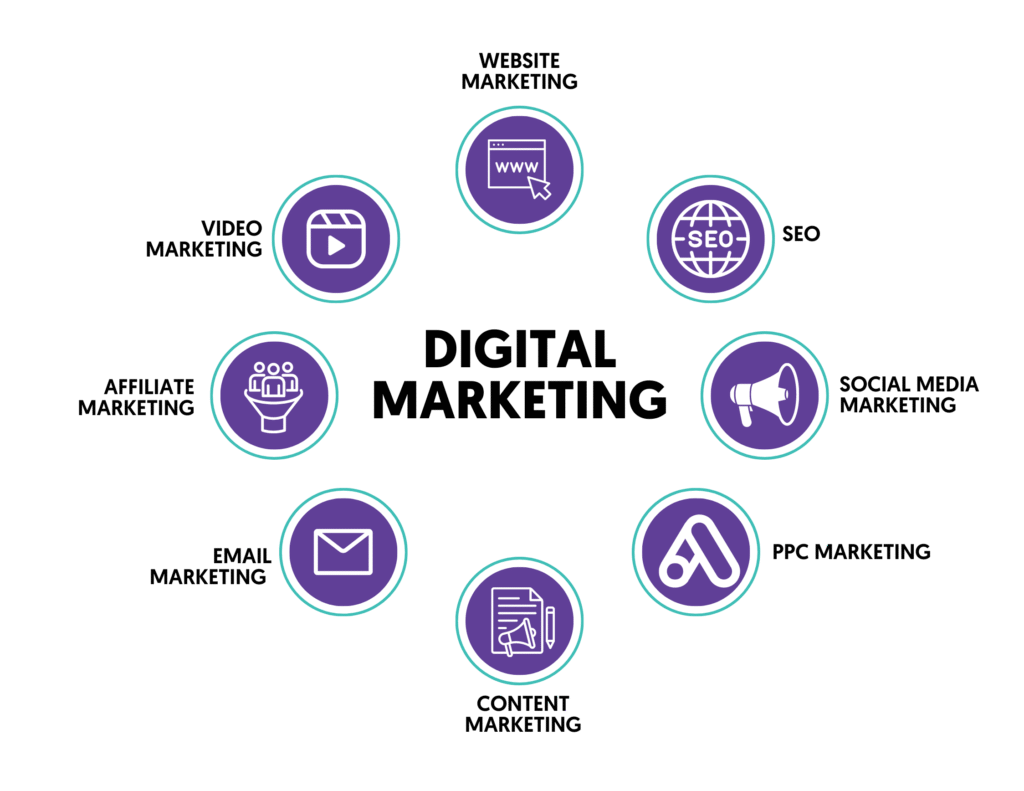
In today’s fast-paced digital world, businesses are rapidly shifting from traditional marketing methods to online platforms. Digital marketing has become the backbone of modern business strategies, enabling companies to reach their target audience more effectively, efficiently, and affordably. Whether you are a small business owner, a student, or someone looking to build a career in marketing, understanding digital marketing is essential.
Digital marketing refers to the promotion of products or services using digital channels such as search engines, social media, email, and websites. Unlike traditional marketing, digital marketing allows businesses to track performance in real-time, optimize campaigns, and achieve better returns on investment.
This comprehensive guide will walk you through everything you need to know about digital marketing, including its importance, types, strategies, tools, and future trends.
What is Digital Marketing?
Digital marketing is the use of online platforms and technologies to promote products, services, or brands. It involves various techniques and channels that help businesses connect with their audience where they spend most of their time — the internet.
From search engines like Google to social media platforms like Instagram and Facebook, digital marketing covers a wide range of channels that help businesses increase visibility and drive sales.
🌐 Importance of Digital Marketing
Digital marketing has transformed the way businesses operate. Here are some reasons why it is important:
1. Global Reach
With digital marketing, businesses can reach customers across the world without geographical limitations.
2. Cost-Effective
Compared to traditional marketing methods like TV or print ads, digital marketing is more affordable and offers better ROI.
3. Measurable Results
Tools like analytics dashboards allow marketers to track performance, measure success, and optimize campaigns.
4. Targeted Audience
Businesses can target specific demographics, interests, and behaviors to reach the right audience.
5. Increased Engagement
Digital platforms allow direct interaction with customers, building trust and relationships.
Types of Digital Marketing
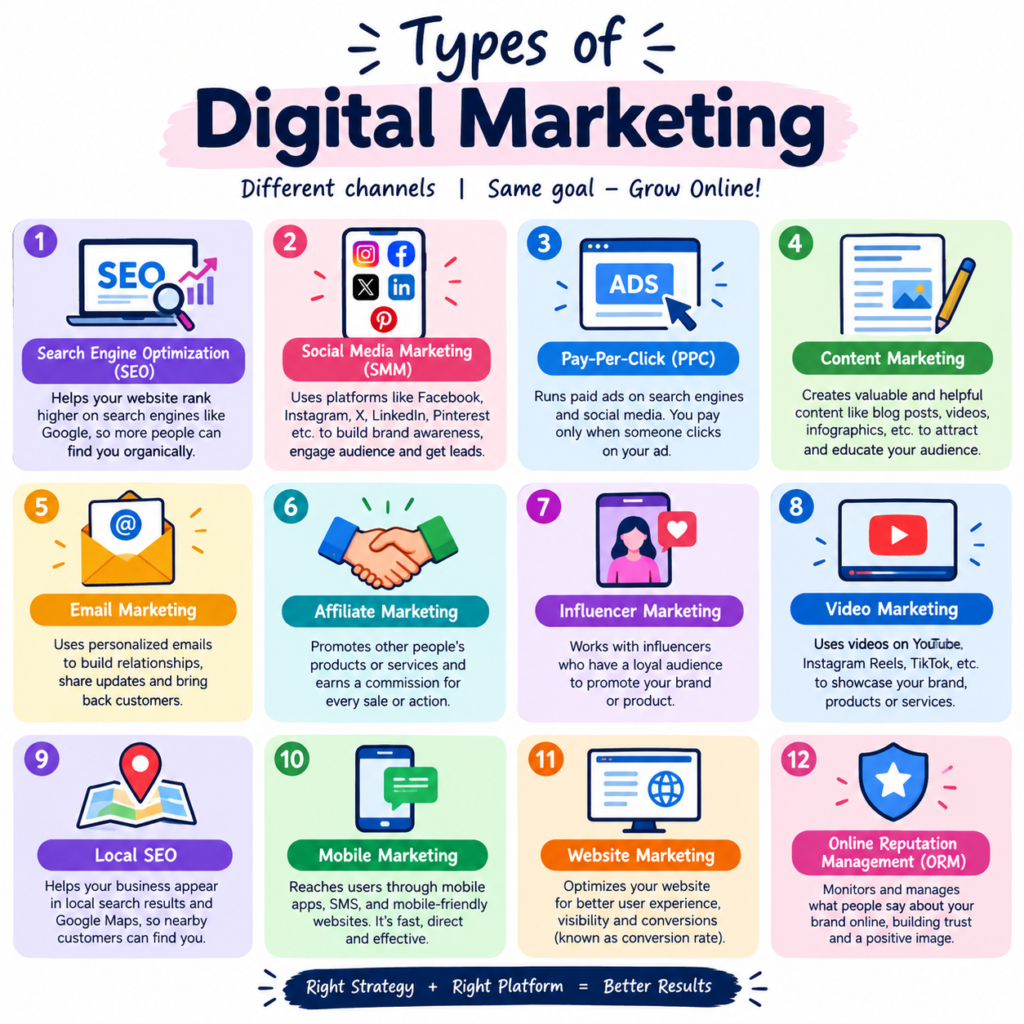
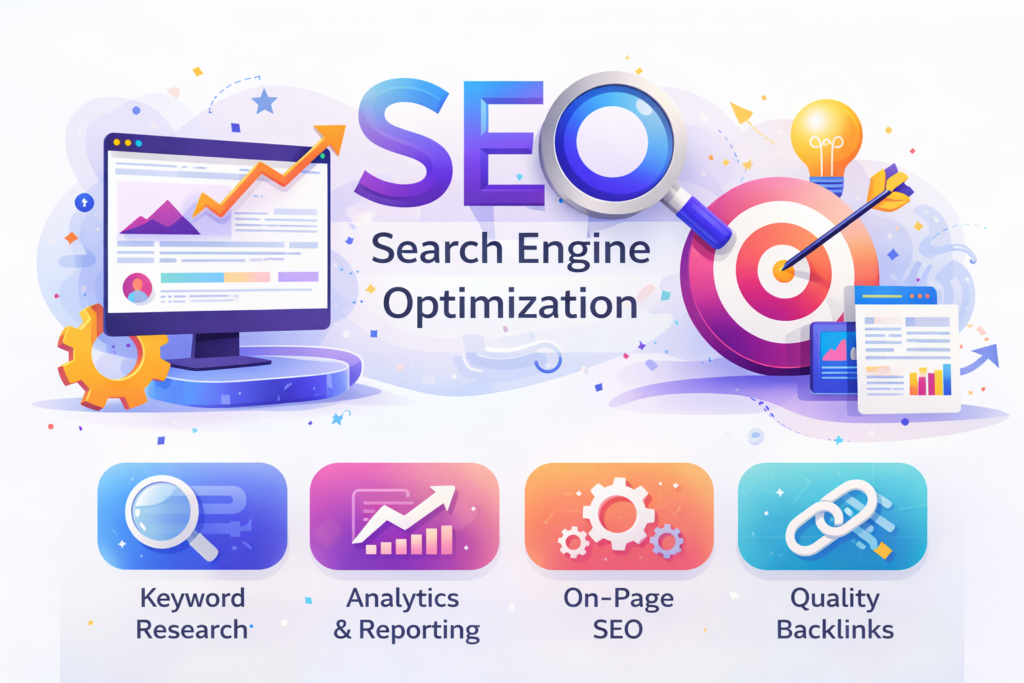
1. Search Engine Optimization (SEO)
SEO is the process of optimizing a website to rank higher on search engine results pages (SERPs). It involves:
- Keyword research
- On-page optimization
- Off-page optimization
- Technical SEO
SEO helps drive organic (free) traffic to your website.
2. Pay-Per-Click Advertising (PPC)
PPC is a paid marketing strategy where advertisers pay each time someone clicks on their ad. Platforms include:
- Google Ads
- Bing Ads
PPC delivers quick results and is ideal for generating leads and sales.
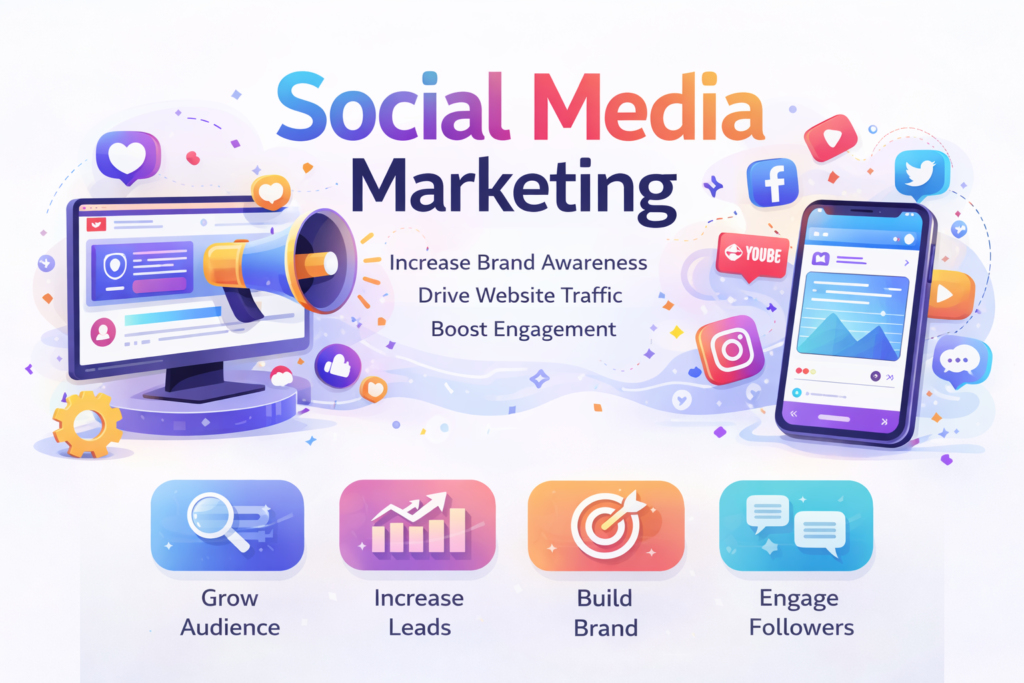
3. Social Media Marketing (SMM)
Social media marketing involves promoting your brand on platforms like:
It helps build brand awareness, engage with customers, and drive traffic.
4. Content Marketing
Content marketing focuses on creating valuable and relevant content to attract and retain customers. Examples include:
- Blog posts
- Videos
- Infographics
- E-books
5. Email Marketing
Email marketing involves sending targeted emails to potential and existing customers. It is effective for:
- Lead nurturing
- Promotions
- Customer retention
6. Affiliate Marketing
In affiliate marketing, businesses partner with individuals or companies to promote their products. Affiliates earn a commission for each sale they generate.
7. Influencer Marketing
Influencer marketing involves collaborating with influencers to promote products or services to their audience.
Digital Marketing Tools
Here are some popular tools used in digital marketing:
- Google Analytics (for tracking website performance)
- Google Ads (for paid campaigns)
- SEMrush (for SEO and keyword research)
- Canva (for graphic design)
- Mailchimp (for email marketing)
How to Create a Digital Marketing Strategy
A successful digital marketing strategy requires careful planning. Follow these steps:
1. Set Clear Goals
Define what you want to achieve (e.g., traffic, leads, sales).
2. Identify Your Target Audience
Understand your audience’s needs, preferences, and behavior.
3. Choose the Right Channels
Select platforms where your audience is most active.
4. Create Quality Content
Develop engaging and valuable content.
5. Monitor and Optimize
Track performance and make improvements.
SEO Best Practices
To rank higher on search engines, follow these SEO tips:
- Use relevant keywords
- Optimize meta titles and descriptions
- Improve website speed
- Create high-quality content
- Build backlinks
Role of Social Media in Digital Marketing
Social media plays a crucial role in digital marketing. It allows businesses to:
- Build brand awareness
- Engage with customers
- Promote products
- Run targeted ads
Consistency and creativity are key to success on social media.
Benefits of Digital Marketing
- Higher conversion rates
- Better customer insights
- Improved brand loyalty
- Real-time performance tracking
- Scalability
Challenges in Digital Marketing
Despite its benefits, digital marketing comes with challenges:
- High competition
- Constant algorithm changes
- Need for continuous learning
- Data privacy concerns
Career Opportunities in Digital Marketing
Digital marketing offers a wide range of career options:
- SEO Specialist
- Social Media Manager
- Content Writer
- PPC Expert
- Email Marketing Specialist
With the growing demand for digital skills, it is a promising career path.
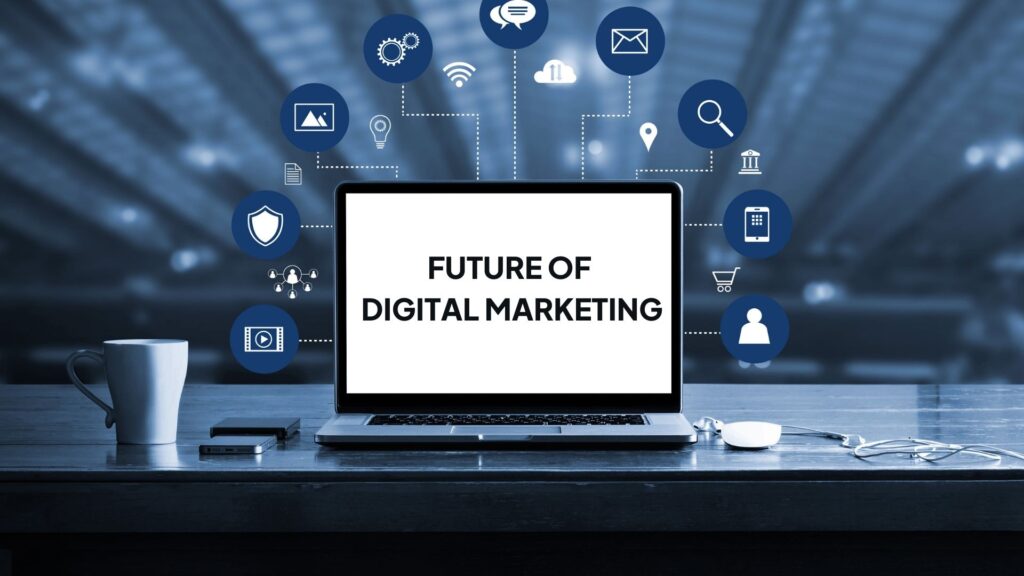
Future of Digital Marketing
The future of digital marketing looks bright with emerging trends like:
- Artificial Intelligence (AI)
- Voice Search
- Video Marketing
- Personalization
- Automation
Businesses that adapt to these trends will stay ahead of the competition.
Conclusion
Digital marketing is no longer optional — it is essential for business growth. It provides opportunities to reach a wider audience, build strong relationships, and achieve measurable results. Whether you are a beginner or an experienced marketer, mastering digital marketing can open doors to endless possibilities.
Start your digital marketing journey today and stay ahead in the competitive online world.
SEO Meta (for WordPress)
Meta Title: Digital Marketing Guide 2026 | Complete Beginner’s Guide
Meta Description: Learn digital marketing with this complete guide. Explore SEO, PPC, social media, tools, and strategies to grow your business online.
Focus Keyword: Digital Marketing
Frequently Asked Questions (FAQs)
1. What is digital marketing in simple words?
Digital marketing is the promotion of products or services using online platforms like search engines, social media, email, and websites.
2. Why is digital marketing important for businesses?
Digital marketing helps businesses reach a wider audience, generate leads, increase sales, and track performance in real-time.
3. What are the main types of digital marketing?
The main types include SEO, PPC (paid ads), social media marketing, content marketing, email marketing, and affiliate marketing.
4. Is digital marketing a good career option?
Yes, digital marketing is a highly in-demand skill with many career opportunities such as SEO specialist, social media manager, and PPC expert.
5. How long does it take to learn digital marketing?
It usually takes 3 to 6 months to learn the basics, but mastering digital marketing requires continuous learning and practice.
6. What is SEO in digital marketing?
SEO (Search Engine Optimization) is the process of improving a website’s ranking on search engines to get organic (free) traffic.
7. What is the difference between SEO and PPC?
SEO focuses on organic traffic, while PPC involves paid advertising where you pay for each click on your ads.
8. Which platform is best for digital marketing?
It depends on your target audience. Google is best for search ads, while platforms like Instagram and Facebook are great for social media marketing.
9. Can I start digital marketing with no experience?
Yes, beginners can start with free resources, practice on small projects, and gradually build their skills.
10. What tools are used in digital marketing?
Popular tools include Google Analytics, Google Ads, SEMrush, Canva, and Mailchimp.

