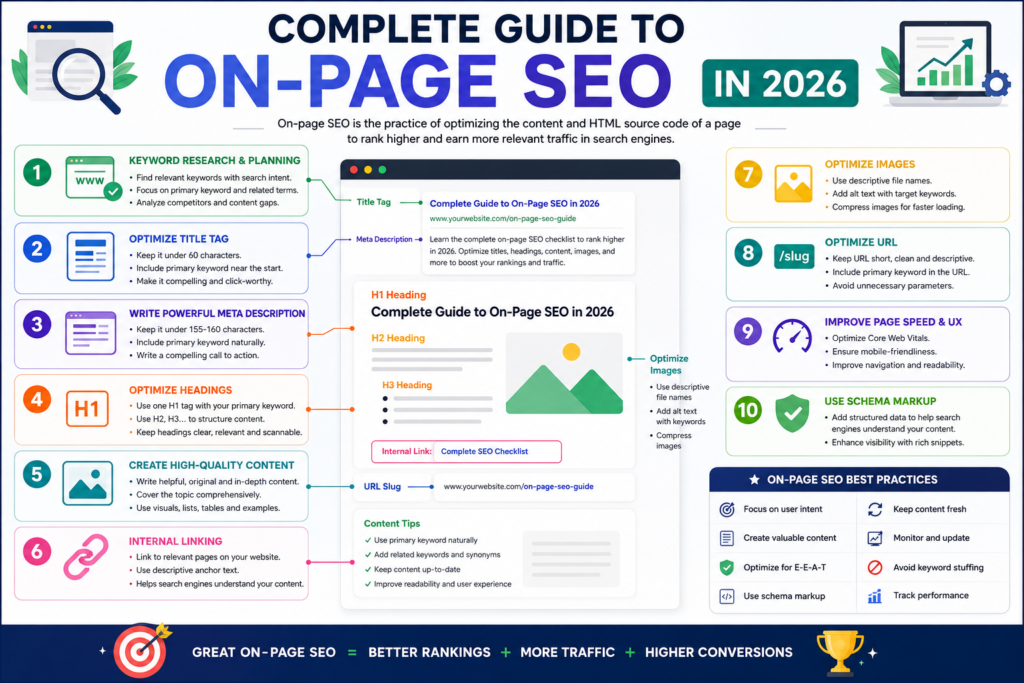

On-page SEO is one of the most important parts of digital marketing and search engine optimization. It refers to all the optimization techniques that are done directly on a website to improve its ranking on search engines like Google. The main goal of on-page SEO is to help search engines understand your website content while also improving the user experience.
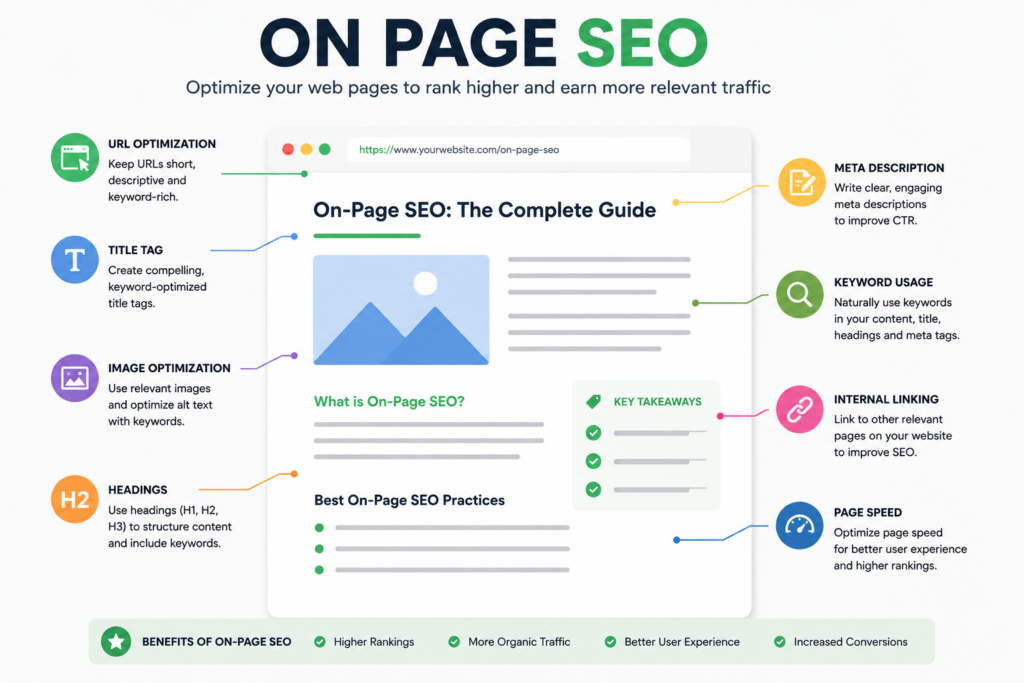
In today’s competitive digital world, simply creating a website is not enough. If your website is not optimized properly, it may not appear in search engine results. On-page SEO helps businesses, bloggers, and marketers increase website traffic, improve visibility, and generate more leads or sales.
Whether you are running an eCommerce website, blog, service website, or portfolio site, understanding on-page SEO is essential for online success.
What is On-Page SEO?
On-page SEO is the process of optimizing individual web pages to rank higher in search engines and attract relevant organic traffic. It includes optimizing content, HTML source code, images, headings, keywords, URLs, and internal links.
Unlike off-page SEO, which focuses on backlinks and external signals, on-page SEO is fully under your control.
Main Objectives of On-Page SEO
- Improve search engine rankings
- Increase website traffic
- Enhance user experience
- Improve website speed
- Increase click-through rate (CTR)
- Make content easy to understand
- Help search engines crawl pages effectively
Why On-Page SEO is Important
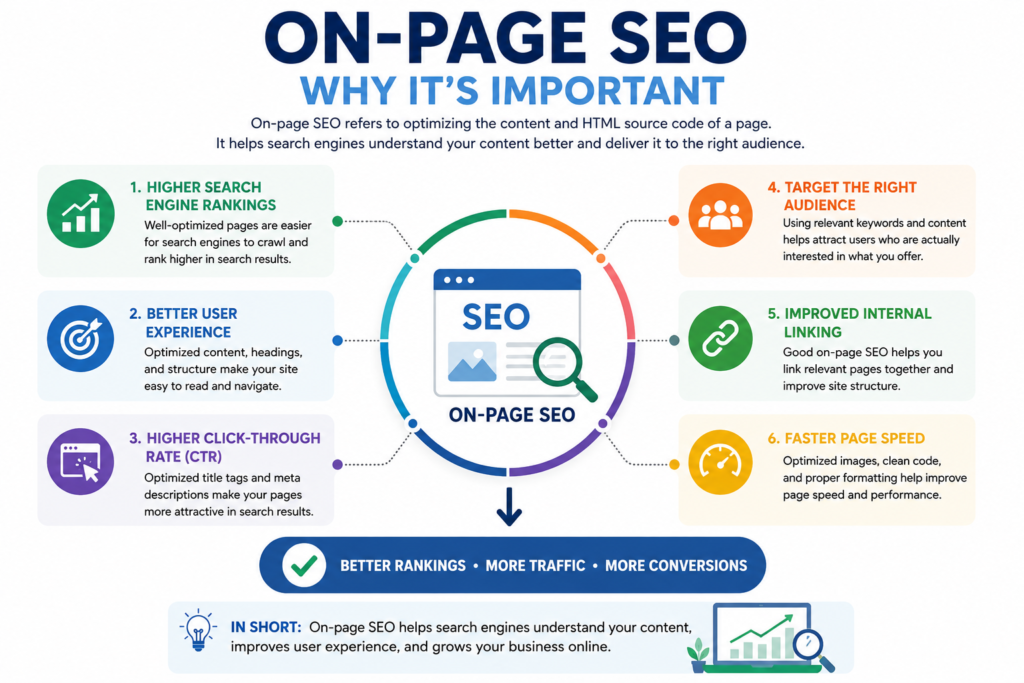
On-page SEO plays a major role in helping search engines understand your content and determine whether it is useful for users.
Here are some important benefits of on-page SEO:
1. Better Search Engine Rankings
Proper optimization helps your pages rank higher on search engines. Higher rankings mean more visibility and more visitors.
2. Improved User Experience
A well-optimized website is easier to navigate, mobile-friendly, and faster to load. This improves the overall user experience.
3. Increased Organic Traffic
When your website ranks for targeted keywords, more users can discover your content naturally through search results.
4. Higher Conversion Rate
Optimized pages provide better information and user experience, which can increase leads, inquiries, and sales.
5. Helps Search Engines Understand Content
Search engines use titles, headings, keywords, and content structure to understand what your page is about.
Important Elements of On-Page SEO
1. Keyword Research
Keyword research is the foundation of on-page SEO. Keywords are the words and phrases users type into search engines.
Types of Keywords
- Short-tail keywords
- Long-tail keywords
- Transactional keywords
- Informational keywords
- Local keywords
Example
Instead of targeting only:
“SEO”
You can target:
- “Best on-page SEO techniques”
- “On-page SEO checklist”
- “How to improve website SEO”
Long-tail keywords are easier to rank for and usually bring targeted traffic.
2. SEO-Friendly Title Tags
Title tags are one of the most important ranking factors. They appear in search engine results and browser tabs.
Best Practices for Title Tags
- Keep title length between 50–60 characters
- Include primary keyword
- Make it attractive for users
- Avoid keyword stuffing
Example
Good Title:
Complete On-Page SEO Guide for Beginners
Bad Title:
SEO SEO SEO Best SEO Services SEO Expert
3. Meta Descriptions
Meta descriptions provide a short summary of your webpage content.
Tips for Writing Meta Descriptions
- Keep length around 150–160 characters
- Add target keywords naturally
- Use actionable language
- Make users want to click
Example
Learn complete on-page SEO techniques to improve website rankings, traffic, and user experience with this beginner-friendly guide.
4. URL Structure
SEO-friendly URLs are short, readable, and keyword-rich.
Good URL Example
yourwebsite.com/on-page-seo-guide
Bad URL Example
yourwebsite.com/page?id=12345
URL Optimization Tips
- Keep URLs short
- Include keywords
- Use hyphens instead of underscores
- Avoid unnecessary numbers
5. Heading Tags (H1, H2, H3)
Headings organize your content and improve readability.
Heading Structure Example
- H1: Main Title
- H2: Main Sections
- H3: Subsections
Benefits of Proper Headings
- Better content organization
- Improved readability
- Helps search engines understand content hierarchy
6. High-Quality Content
Content is the heart of on-page SEO. High-quality content attracts visitors and improves rankings.
Characteristics of Good Content
- Original and unique
- Informative and valuable
- Easy to read
- Keyword optimized
- Updated regularly
Search engines prioritize content that solves user problems and answers questions effectively.
7. Keyword Optimization
Keywords should be used naturally throughout the content.
Important Places to Add Keywords
- Title tag
- Meta description
- First paragraph
- Headings
- Image alt text
- URL
- Conclusion
Avoid Keyword Stuffing
Overusing keywords can harm your rankings.
Bad Example
“SEO services are best SEO services for SEO ranking.”
Good Example
“Our SEO services help businesses improve online visibility and rankings.”
8. Internal Linking
Internal links connect one page of your website to another.
Benefits of Internal Linking
- Improves navigation
- Distributes page authority
- Helps search engines crawl pages
- Keeps users on the website longer
Example
You can link:
- Blog posts
- Service pages
- Contact page
- Related articles
9. Image Optimization
Images improve content engagement, but large images can slow down your website.
Image SEO Best Practices
- Compress images
- Use descriptive file names
- Add alt text
- Choose correct image format
- Make images mobile-friendly
Example Alt Text
“On-page SEO optimization checklist”
10. Mobile Friendliness
Most users browse websites on mobile devices. Search engines prioritize mobile-friendly websites.
Mobile SEO Tips
- Responsive design
- Fast loading speed
- Easy navigation
- Readable fonts
- Optimized images
A mobile-friendly website improves both rankings and user experience.
11. Page Speed Optimization
Website speed is a major ranking factor.
Ways to Improve Page Speed
- Compress images
- Use browser caching
- Minify CSS and JavaScript
- Choose fast hosting
- Reduce unnecessary plugins
A fast-loading website reduces bounce rate and improves engagement.
12. User Experience (UX)
Good user experience is essential for SEO success.
Important UX Factors
- Clean website design
- Easy navigation
- Clear call-to-action buttons
- Fast loading pages
- Readable content
Search engines monitor user behavior such as bounce rate and time spent on pages.
13. Content Readability
Readable content keeps users engaged.
Tips to Improve Readability
- Use short paragraphs
- Add bullet points
- Use simple language
- Include headings and subheadings
- Avoid complicated sentences
Readable content improves engagement and SEO performance.
14. Schema Markup
Schema markup helps search engines understand webpage information better.
Benefits of Schema Markup
- Rich snippets in search results
- Better visibility
- Improved click-through rates
Common Types of Schema
- FAQ schema
- Article schema
- Product schema
- Review schema
- Local business schema
15. SEO Optimized Content Structure
A well-structured article improves readability and rankings.
Ideal Content Structure
- Introduction
- Main headings
- Subheadings
- Bullet points
- Conclusion
- FAQs
This structure helps both users and search engines understand content easily.
On-Page SEO Checklist
Here is a quick on-page SEO checklist:
Use target keyword in title
Write optimized meta description
Use SEO-friendly URLs
Add headings properly
Optimize images
Improve page speed
Use internal links
Create quality content
Make website mobile-friendly
Add alt text to images
Improve readability
Use schema markup
Common On-Page SEO Mistakes
1. Keyword Stuffing
Overusing keywords makes content unnatural and can harm rankings.
2. Duplicate Content
Copied content can negatively affect SEO performance.
3. Missing Meta Tags
Pages without titles and descriptions may have lower click-through rates.
4. Slow Website Speed
Slow websites increase bounce rate and reduce user satisfaction.
5. Poor Mobile Optimization
Non-responsive websites perform poorly on mobile devices.
6. Broken Links
Broken links harm user experience and SEO.
Best On-Page SEO Tools
Many tools help improve on-page SEO performance.
Popular SEO Tools
Google Search Console
Helps monitor website performance and indexing.
Google Analytics
Tracks traffic and user behavior.
Yoast SEO
Popular SEO plugin for WordPress websites.
Ahrefs
Useful for keyword research and backlink analysis.
SEMrush
Complete SEO and digital marketing toolkit.
Advanced On-Page SEO Techniques
1. Topic Clusters
Create related content around a main topic to improve authority.
2. E-E-A-T Optimization
Search engines value:
- Experience
- Expertise
- Authoritativeness
- Trustworthiness
3. Featured Snippet Optimization
Structure content in question-answer format to increase chances of appearing in featured snippets.
4. Voice Search Optimization
Use conversational keywords and FAQs for voice search optimization.
Future of On-Page SEO
On-page SEO is continuously evolving with search engine algorithm updates and AI-driven search experiences.
Future Trends
- AI-generated search results
- Voice search growth
- Mobile-first indexing
- User intent optimization
- Video SEO
- Core Web Vitals importance
Businesses that focus on user experience and valuable content will continue to succeed.
Conclusion
On-page SEO is one of the most powerful strategies for improving website visibility, rankings, and traffic. It helps search engines understand your content while providing a better experience for users.
From keyword research and content optimization to page speed and mobile friendliness, every element of on-page SEO contributes to online success.
If you want your website to rank higher on search engines and attract more visitors, investing time in proper on-page SEO is essential. By following the techniques and best practices discussed in this guide, you can build a strong SEO foundation and grow your online presence successfully.
FAQs About On-Page SEO
What is the difference between on-page SEO and off-page SEO?
On-page SEO focuses on website optimization, while off-page SEO focuses on backlinks and external promotion.
How long does on-page SEO take to show results?
SEO results usually take a few weeks to several months depending on competition and website quality.
Is content important for on-page SEO?
Yes, high-quality content is one of the most important ranking factors.
Can beginners learn on-page SEO?
Yes, beginners can easily learn on-page SEO with practice and proper guidance.
Which is the best free SEO tool?
Google Search Console is one of the best free SEO tools for website monitoring and optimization.