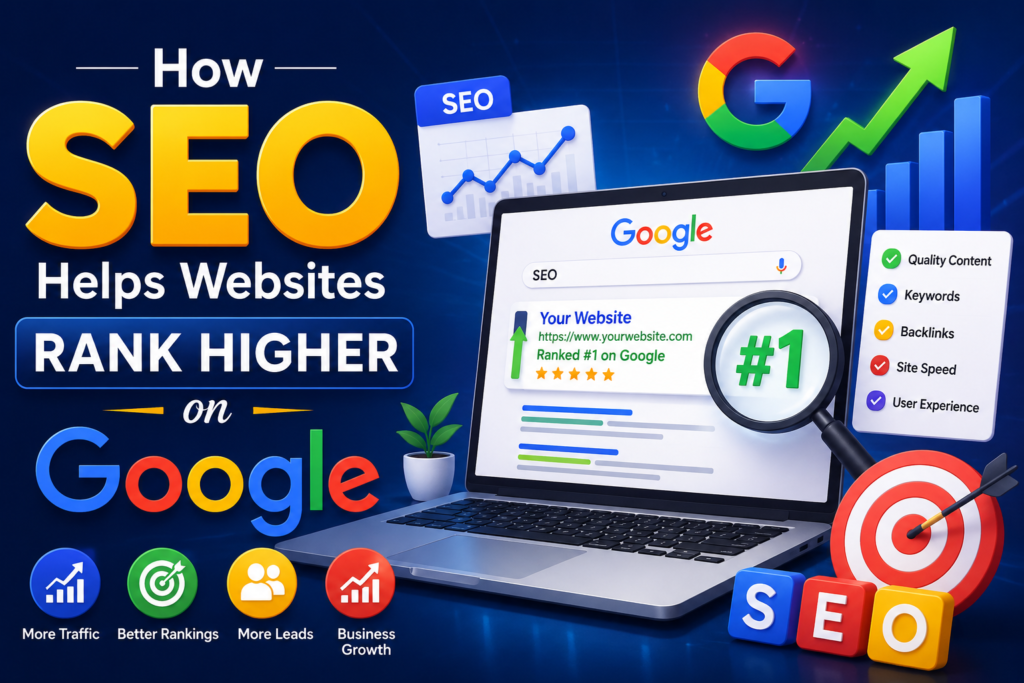

In today’s digital world, having a website is not enough. Millions of websites compete for attention every day, making it difficult for businesses to reach their target audience. This is where Search Engine Optimization (SEO) becomes essential. SEO is the process of improving a website so that it appears higher in search engine results when users search for relevant keywords.
When a website ranks higher on Google, it gains more visibility, attracts more visitors, and creates greater opportunities for leads, sales, and business growth. Whether you run a small business, an e-commerce store, or a service-based company, SEO plays a crucial role in building your online presence.
What is SEO?
Search Engine Optimization, commonly known as SEO, is the practice of optimizing a website to improve its rankings on search engines. The goal of SEO is to help search engines understand your content and determine whether it is valuable and relevant to users.
SEO involves various strategies, including keyword optimization, content creation, technical improvements, and link building. These efforts work together to make a website more accessible and useful for both users and search engines.
Why is Ranking Higher on Google Important?
Most internet users rarely go beyond the first page of search results. Websites that appear on the first page receive the majority of clicks and traffic, while lower-ranked websites often struggle to gain visibility.
Higher rankings provide several benefits:
- Increased website traffic
- Better brand visibility
- More qualified leads
- Higher conversion rates
- Improved credibility and trust
- Long-term business growth
Businesses that invest in SEO often gain a competitive advantage in their industry.
How Google Ranks Websites
Google uses complex algorithms to determine which websites deserve higher rankings for specific search queries. These algorithms evaluate hundreds of ranking factors to deliver the most relevant and useful results to users.
Some important ranking factors include:
- Content quality and relevance
- Keyword usage
- Website speed
- Mobile friendliness
- User experience
- Backlinks from reputable websites
- Website security
- Page structure and navigation
SEO helps optimize these factors so that Google can better understand and rank your website.
Keyword Optimization Helps Google Understand Your Content
Keywords are the words and phrases users type into search engines when looking for information. Using relevant keywords throughout your content helps Google understand what your page is about.
For example, if someone searches for “best digital marketing course in Delhi,” Google will look for pages that contain relevant information related to that search query.
However, keyword usage should feel natural. Overusing keywords can harm rankings and reduce content quality. The focus should always remain on providing useful information to readers.
High-Quality Content Improves Rankings
Content is one of the most important elements of SEO. Google prioritizes websites that provide valuable, informative, and engaging content for users.
High-quality content should:
- Answer users’ questions clearly.
- Provide accurate information.
- Be easy to read and understand.
- Include relevant keywords naturally.
- Offer solutions to common problems.
Regularly publishing fresh and useful content signals to Google that your website remains active and relevant.
On-Page SEO Improves Search Visibility
On-page SEO refers to optimizations made directly on website pages to improve rankings.
Important on-page SEO elements include:
Title Tags
The title tag tells both users and search engines what the page is about. A clear and keyword-rich title can improve click-through rates and rankings.
Meta Descriptions
A compelling meta description encourages users to click on your website from search results.
Header Tags
Using headings such as H1, H2, and H3 improves content organization and readability.
Image Optimization
Images should include descriptive file names and alt text to help search engines understand visual content.
Internal Linking
Linking related pages within your website helps users navigate easily and allows search engines to crawl your site more efficiently.
Technical SEO Enhances Website Performance
Technical SEO focuses on improving the backend structure of a website to help search engines crawl and index pages effectively.
Important technical SEO factors include:
- Fast page loading speed
- Mobile responsiveness
- Secure HTTPS connection
- XML sitemaps
- Clean URL structures
- Fixing broken links
- Improving website architecture
A technically optimized website provides a better experience for users and search engines alike.
Mobile Optimization is Essential
With the majority of internet users browsing on smartphones, mobile optimization has become a major ranking factor.
A mobile-friendly website should:
- Load quickly on mobile devices.
- Display correctly on different screen sizes.
- Use readable fonts.
- Have easy-to-click buttons and menus.
Google uses mobile-first indexing, meaning it primarily evaluates the mobile version of a website when determining rankings.
Backlinks Increase Website Authority
Backlinks are links from other websites that point to your website. They act as votes of confidence and indicate that your content is trustworthy and valuable.
Quality backlinks from authoritative websites can significantly improve rankings by increasing domain authority and credibility.
However, quality matters more than quantity. A few high-quality backlinks are often more valuable than hundreds of low-quality ones.
User Experience Influences Rankings
Google aims to provide users with the best possible experience. If visitors quickly leave your website due to poor design or slow loading times, rankings may suffer.
Improving user experience involves:
- Fast loading pages
- Easy navigation
- Clear website structure
- Helpful content
- Mobile-friendly design
- Minimal intrusive advertisements
A positive user experience encourages visitors to stay longer and engage with your content.
Local SEO Helps Businesses Reach Nearby Customers
Local SEO is especially important for businesses targeting customers in specific locations.
Local SEO strategies include:
- Optimizing location-based keywords.
- Creating local business listings.
- Collecting customer reviews.
- Maintaining accurate business information.
- Creating locally relevant content.
Local SEO helps businesses appear in local search results and attract nearby customers.
SEO Provides Long-Term Results
Unlike paid advertising, which stops generating traffic once the budget runs out, SEO continues delivering results over time.
Although SEO requires patience and consistent effort, it often produces sustainable traffic and long-term business growth. Websites that maintain strong SEO practices can continue attracting visitors for months or even years.
Common SEO Mistakes to Avoid
Many websites fail to achieve strong rankings because of common SEO mistakes such as:
- Keyword stuffing
- Duplicate content
- Ignoring mobile optimization
- Slow page speeds
- Broken links
- Poor-quality backlinks
- Missing meta tags
- Publishing thin or low-value content
Avoiding these mistakes can significantly improve your website’s performance.
The Future of SEO
SEO continues to evolve as search engines become more sophisticated. Artificial intelligence, voice search, and user experience are becoming increasingly important ranking factors.
Businesses that focus on creating valuable content and providing excellent user experiences will be better positioned for future search engine updates.
Staying updated with SEO trends and algorithm changes will remain essential for maintaining strong rankings.
Conclusion
SEO is one of the most effective strategies for helping websites rank higher on Google and reach their target audience. By optimizing keywords, creating high-quality content, improving technical performance, and enhancing user experience, businesses can increase their visibility and attract more organic traffic.
Higher rankings lead to greater credibility, more leads, and stronger business growth. While SEO requires time and consistency, the long-term benefits make it a valuable investment for any website looking to succeed online.
Businesses that prioritize SEO today are more likely to achieve sustainable online growth and remain competitive in an increasingly digital marketplaces
FAQs
1. What is SEO and why is it important for websites?
SEO (Search Engine Optimization) is the process of improving a website’s visibility on search engines. It helps websites attract more organic traffic, generate leads, and increase online visibility.
2. How does Google decide which websites rank higher?
Google uses various ranking factors such as content quality, keyword relevance, website speed, mobile friendliness, backlinks, and user experience to determine rankings.
3. How long does SEO take to show results?
SEO is a long-term strategy. Most websites start seeing noticeable improvements within 3 to 6 months, depending on competition and optimization efforts.
4. Can SEO help small businesses compete with larger companies?
Yes. A well-planned SEO strategy can help small businesses rank for targeted keywords and attract potential customers without spending heavily on advertising.
5. What are keywords in SEO?
Keywords are the words and phrases users type into search engines to find information, products, or services related to their needs.
6. Does website speed affect Google rankings?
Yes. Fast-loading websites provide a better user experience, and Google considers page speed as an important ranking factor.
7. Why are backlinks important for SEO?
Backlinks act as recommendations from other websites. High-quality backlinks improve website authority and can help increase search rankings.
8. Is mobile optimization necessary for SEO?
Absolutely. Since most users browse on mobile devices, Google prioritizes mobile-friendly websites in its search results.
9. What is the difference between SEO and paid advertising?
SEO focuses on generating organic traffic through search rankings, while paid advertising brings traffic through sponsored ads that stop when the budget ends.
10. Is SEO a one-time process?
No. SEO requires continuous updates, content improvements, and monitoring to maintain and improve rankings over time.